




Publications Library

Join investigative reporter Tom Bellingham Cross Holloway as he delves into the depths of the US power system with hard-hitting questions and a relentless pursuit for answers from the industry’s top executives.

When properly installed, battery storage has proven to be a safe technology, and it is becoming safer every year as more protective regulations and best practices are established. However, many communities have raised concerns about battery storage safety, especially regarding lithium-ion batteries, which currently dominate the battery storage technology market. To build battery storage safety…
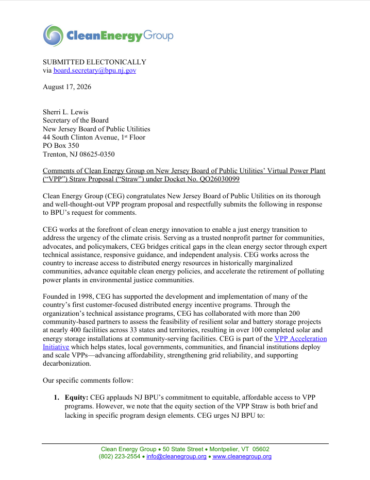
CEG submitted comments to the New Jersey Board of Public Utilities (NJ BPU) concerning their Virtual Power Plant Straw Proposal under Docket No. QO26030099.

To help policymakers and community advocates better understand the energy impacts of AI and data centers, Clean Energy Group produced a 2-page introduction to these topics.
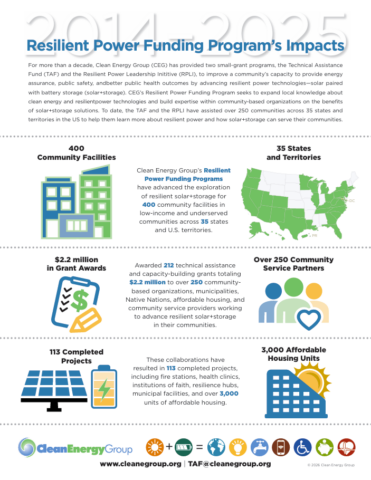
This document summarizes some of the key project outcomes of the Resilient Power Project through providing information, knowledge-building support, and technical assistance to organizations working in low-income communities and communities of color across the country.

When properly installed, battery storage has proven to be a safe technology, and it is becoming safer every year as more protective regulations and best practices are established. However, many communities have raised concerns about battery storage safety, especially regarding lithium-ion batteries, which currently dominate the battery storage technology market. To build battery storage safety…

This Clean Energy Group case study covers the first-ever Beehive Microgrid project in New Orleans, Louisiana. The study includes financial details, design schematics, and lessons learned throughout the process.
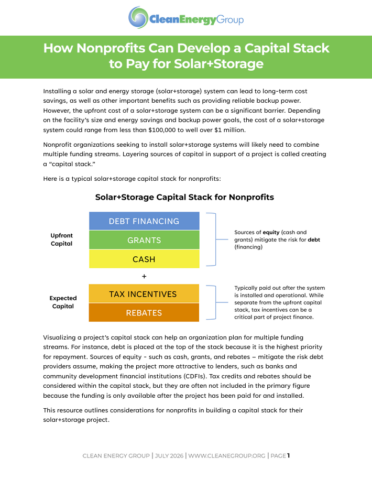
This short guide to developing capital stacks outlines considerations for nonprofits interested in pursuing solar+storage. The guide includes real examples of capital stacks from nonprofit-led solar+storage projects across the country.
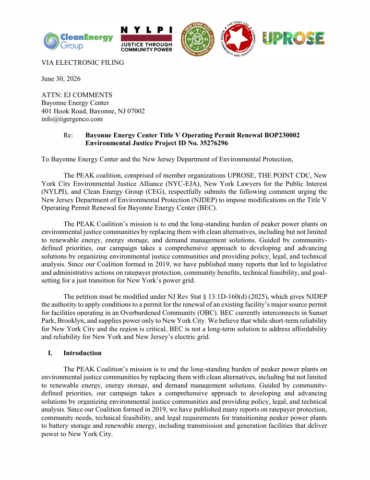
The PEAK Coalition submitted comments urging the New Jersey Department of Environmental Protection to impose modifications on the Title V Operating Permit Renewal for Bayonne Energy Center, a gas-fired peaker power plant.
Comments on the Rhode Island Energy Draft System Reliability Procurement Plan
Clean Energy Group submitted comments to the Rhode Island Public Utilities Commission on the need to incorporate equity provisions into the state’s ConnectedSolutions energy storage incentive program, in order to expand access for low- and moderate-income households. The comments highlight program examples from other states.