




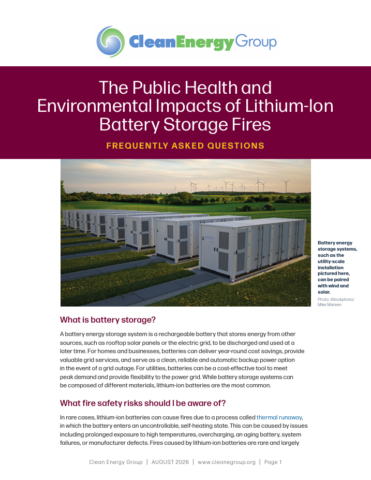
The Public Health and Environmental Impacts of Lithium-Ion Battery Storage Fires: Frequently Asked Questions
August 5, 2026
Marriele Mango | Clean Energy Group
When properly installed, battery storage has proven to be a safe technology, and it is becoming safer every year as more protective regulations and best practices are established. However, many communities have raised concerns about battery storage safety, especially regarding lithium-ion batteries, which currently dominate the battery storage technology market.
To build battery storage safety awareness and dispel common misconceptions, Clean Energy Group published a series of informational resources about lithium-ion battery storage fire safety.
This fact sheet addresses the public health and environmental impacts of fires involving lithium-ion batteries. It was designed as an introductory resource suitable for community outreach and education.
Topics covered include:
- What is battery storage?
- What fire safety risks should I be aware of?
- Will a lithium-ion battery fire affect air quality?
- Are there water and soil contamination concerns after battery storage fires?
- What kind of cleanup and monitoring happens after a battery storage fire?
The 4-page fact sheet also includes a short case study of the 2025 fire at the Moss Landing Vistra Power Plant in California, which was the largest battery storage fire ever recorded.
For more information and resources, see Clean Energy Group’s Battery Energy Storage Fire Safety Toolkit.