




The Beehive Microgrid Model: Mobile Solar+Storage in New Orleans
July 14, 2026
Anna Adamsson, Marriele Mango, Olivia Tym | Clean Energy Group
Prolonged power outages can result in a public health crisis, especially during extreme temperatures, with medically vulnerable or mobility-challenged people particularly at risk. In the wake of Hurricane Ida, two dozen Louisiana residents’ deaths were attributed to the 10-day power outage that followed. In response, New Orleans-based nonprofits Footprint Project and Groundwork New Orleans developed an innovative new model to help communities access reliable power during the next big disaster: the Beehive Microgrid Model. This project was supported by early-stage technical assistance funding from Clean Energy Group.
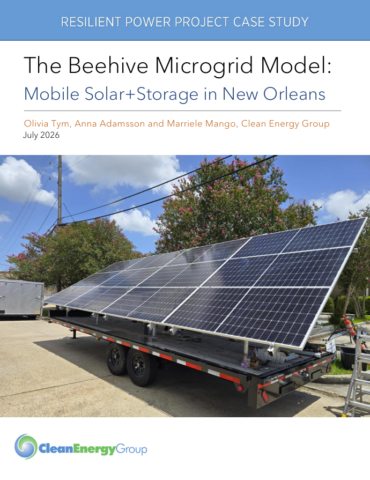
A Beehive Microgrid consists of a “Hive”—a grid-connected microgrid powered by solar and energy storage (solar+storage)—and “Bees”—a group of mobile solar+storage trailers. Bees are charged and stationed at the Hive. In preparation for severe weather or during a power outage, the Bees can be deployed throughout a region to provide services such as Wi-Fi, electrical outlets for charging phones and other devices, refrigeration for food and medication, and to serve as a hub for volunteers or medical providers. When there are no disasters or power outages to respond to, the solar+storage systems can generate economic benefits, such as utility bills savings, and the Bees can be deployed to power outdoor community events like concerts and picnics.
This Clean Energy Group case study covers the first-ever Beehive Microgrid project in New Orleans, Louisiana. The study includes financial details, design schematics, and lessons learned throughout the process.