




How Nonprofits Can Develop a Capital Stack to Pay for Solar+Storage
July 7, 2026
Anna Adamsson | Clean Energy Group
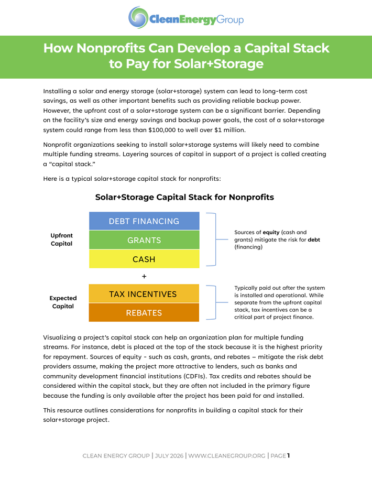
Installing a solar and energy storage (solar+storage) system can lead to long-term cost savings and provide reliable backup power. However, the upfront cost of solar+storage can be a significant barrier. Nonprofit organizations seeking to install solar+storage systems will likely need to combine multiple funding streams, such as grants, cash, and tax incentives. Layering sources of capital in support of a project is called creating a “capital stack.”
This short guide to developing capital stacks outlines considerations for nonprofits interested in pursuing solar+storage. The guide includes real examples of capital stacks from nonprofit-led solar+storage projects across the country. Visualizing a project’s capital stack can help an organization plan for multiple funding streams. For instance, debt is placed at the top of the stack because it is the highest priority for repayment. Sources of equity – such as cash, grants, and rebates – mitigate the risk debt providers assume, making the project more attractive to lenders, such as banks and community development financial institutions (CDFIs). Tax credits and rebates should be considered within the capital stack, but they are often not included in the primary figure because the funding is only available after the project has been paid for and installed.