




Report
A medida que Massachusetts avanza en la electrificación del sector del transporte y de los edificios, una estrategia clave para alcanzar los objetivos de descarbonización del estado, se prevé que la demanda pico de electricidad aumentará sustancialmente. Con el incremento de la demanda de electricidad, es probable que también aumente el costo de esta, poniendo…
Massachusetts has some of the best solar and energy storage programs in the country, but these programs lack meaningful equity provisions, and clean energy adoption rates in environmental justice communities are low. Solar and storage can provide many benefits that would be especially valuable to environmental justice communities, such as lowering energy costs, reducing local…
To meet its emissions reduction targets and decarbonization goals, Massachusetts – like many states – is working towards the electrification of its building and transportation sectors. While this will help reduce air pollution, it will also increase the region’s electric demand, which could lead to a new round of investment in fossil fuel generation. This…
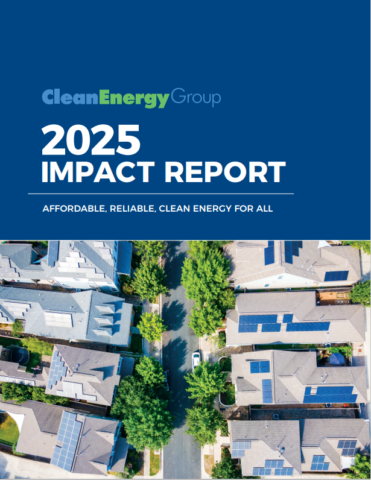
This annual impact report highlights Clean Energy Group’s key initiatives and achievements in 2025. It also recognizes the invaluable contributions of our partners, whose collaboration strengthens our mission.

Massachusetts has committed to achieve net-zero emissions by 2050, a goal that requires retiring the state’s fossil fuel peaker power plants and replacing them with clean, reliable alternatives. This report by the Massachusetts Clean Peak Coalition, with analysis from Synapse Energy Economics, shows that net-zero technologies can meet the state’s peak electricity demand by 2050 while maintaining reliability and containing costs.

This report details the impacts of rising energy demand from data centers in Pennsylvania and explains how the current trajectory will increase fossil fuel energy generation, raise energy costs, and worsen local air quality. The report includes recommendations for how community advocates and policymakers can push back against potentially harmful data center growth in their state.
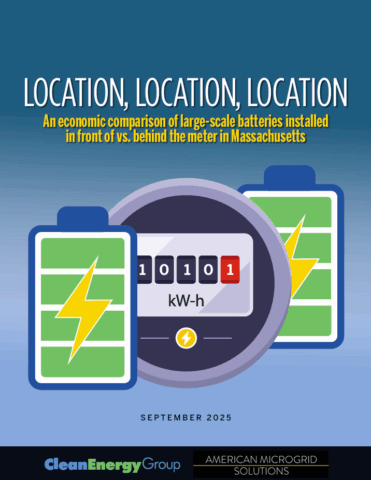
This report compares the costs and benefits of one utility-scale, front-of-the-meter (FTM) battery system versus five commercial-scale, behind-the-meter (BTM) batteries of the same aggregate cost in Massachusetts. The report, commissioned by Clean Energy Group for the Cape and Vineyard Electric Cooperative (CVEC), provides useful information to help CVEC decide between two possible ownership models for…
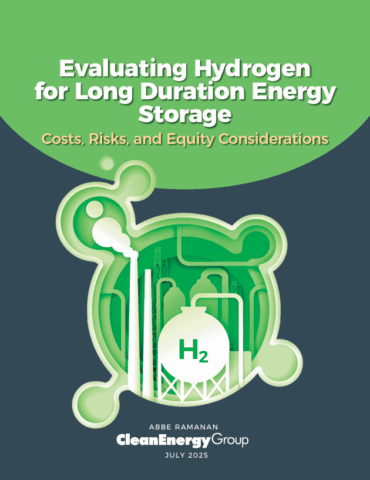
This CEG report contains new analysis evaluating the feasibility of hydrogen power plants as long-duration energy storage resources, based on cost competitiveness as well as equity and environmental impacts.
This annual impact report highlights Clean Energy Group’s key initiatives and achievements in 2024. It also recognizes the invaluable contributions of our partners—including community-based organizations, state agencies, and national laboratories—whose collaboration strengthens our mission.
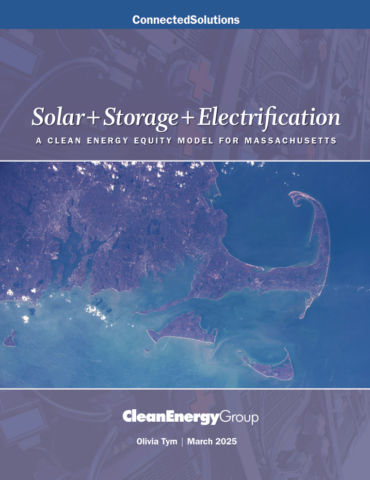
A Massachusetts pilot program provides a replicable and scalable model for bringing renewable energy, battery storage, and electrification to low-income households. The Cape and Vineyard Electrification Offering (CVEO) is run by the Cape Light Compact, an energy services provider serving 210,000 customers in 21 towns on Cape Cod and Martha’s Vineyard. The CVEO pilot is…