




Report
This guide is meant to serve as a starting point to establish a foundation of understanding for individuals and organizations beginning to explore solar+storage options for their homes, businesses, or community facilities.

Clean Energy Group ha publicado una traducción al español de una nueva guía que aborda las preguntas más frecuentes sobre la energía solar fotovoltaica y las tecnologías de almacenamiento de baterías (Solar+Almacenamiento).

This is the Spanish language version of CEG’s Solar+Storage Checklist, designed to serve as a starting point for individuals and organizations who are considering implementing a solar+storage project, with seven simple steps to begin the process.

This checklist is intended to serve as a starting point for individuals and organizations who are considering implementing a solar+storage project, with seven simple steps to begin the process.
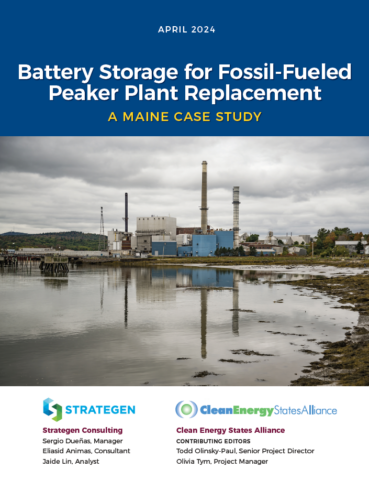
This analysis demonstrates that battery storage can cost effectively replace aging fossil-fueled peaker power plants in New England.
This issue brief provides recommendations and guidance on incentive rate-setting for states seeking to develop distributed (behind-the-meter) energy storage incentive programs. It is intended to help states decide how to structure incentive programs and how to set incentive rates.
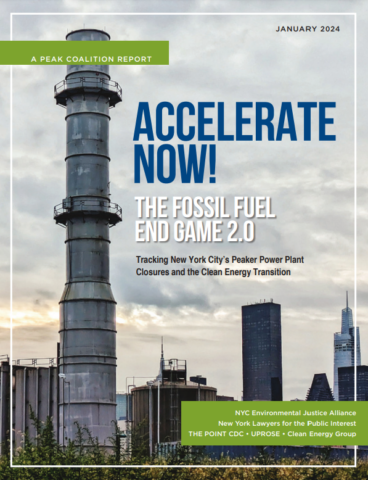
This report outlines the negative impacts that peaker power plants are having on NYC communities, challenges and barriers impeding the speed of the transition, and pathways forward to accelerate the transition to clean alternatives.
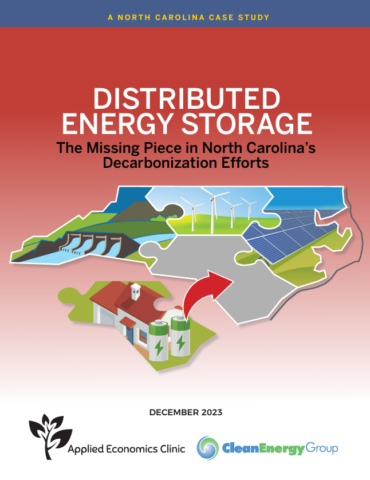
This report aims to give policymakers and advocates the information they need to encourage the inclusion of distributed storage policy in the state’s carbon reduction plans.
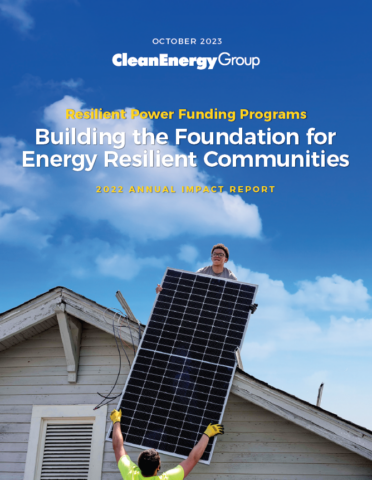
This report outlines the impacts of CEG’s 2022 grantmaking through the Technical Assistance Fund and the Resilient Power Leadership Initiative. The report covers the programs’ projects, partnerships, and lessons learned.
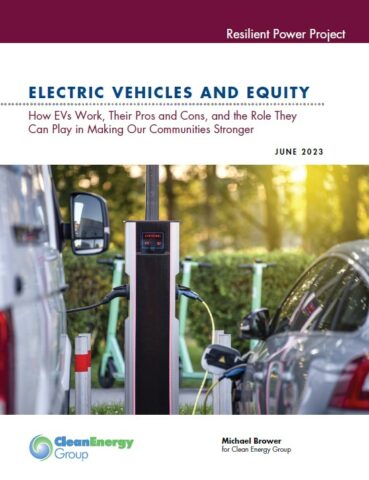
Can electric vehicles play a role in advancing equity in underserved and historically marginalized communities? This report explores that question in four parts.