


September 2, 2026
Hydrogen in 2026: A Fossil Fuel Reality Check
By Abbe Ramanan
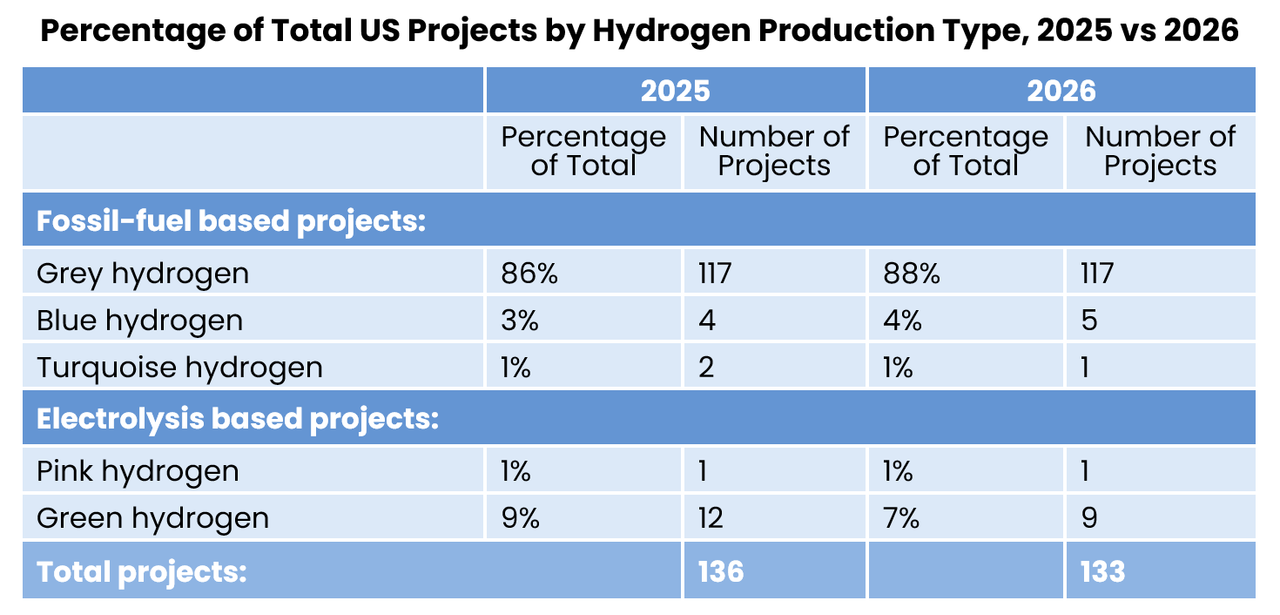
Over 90 percent of hydrogen projects in the US are tied to fossil fuels. This data is reflected in Clean Energy Group’s newly updated interactive map of hydrogen projects under construction or operational in the US.
There have been some high-profile changes to hydrogen policy since the map’s initial publication in 2025, most notably the cancellation of funding for two green hydrogen hubs and the early sunsetting of the 45V Clean Hydrogen Production Tax Credit. While these changes had some impact on the outlook for the hydrogen industry, particularly for green hydrogen (hydrogen produced via electrolysis powered by renewable energy), they have not made a meaningful impact on overall hydrogen production in the US, which has always been, and remains, directly connected to fossil fuels.
An analysis of the total projects in 2025 versus 2026 clearly illustrates this. The total number of green hydrogen projects has gone down, driven by the cancellation of several projects, including the Fortescue plant in Arizona and Plug Power’s hydrogen production facility in New York. However, as illustrated in the mapping tool and shown in the following table, the vast majority of hydrogen projects in the US remain tied to fossil fuels. These include grey hydrogen (hydrogen produced from natural gas using steam methane reforming), blue hydrogen (hydrogen produced via methane reforming but paired with carbon capture and storage), and turquoise hydrogen (hydrogen produced via methane pyrolysis) projects.
Fossil fuels are also driving hydrogen investment. Overall, the industry attracted $400 million in investment between January and March of this year, a 27% increase compared to the last quarter of 2025. However, most of those funds were invested in two large blue hydrogen projects: a Linde plant in Beaumont, Texas, which plans to supply hydrogen for ammonia production used in fertilizer, and Wabash Valley Resources’ plant in Indiana, which will also produce hydrogen for ammonia. For investors, blue hydrogen might seem like a safer bet than green hydrogen, given the early retirement of the 45V hydrogen production tax credit. Unlike green hydrogen, blue hydrogen projects can take advantage of the 45Q Carbon Capture and Storage tax credit, a lucrative incentive that can provide billions of dollars in subsidies. Ammonia production also remains one of the largest end-uses of any hydrogen produced in the US, alongside oil refining.
Hydrogen has always been deeply interconnected with the fossil fuel industry, and its viability as a decarbonization tool has been vastly overstated. As CEG has written before, blue hydrogen production only reduces overall carbon dioxide emissions by 9-12% compared to grey hydrogen. All hydrogen, no matter how it is produced, is also a powerful indirect greenhouse gas that has 35 times the climate warming impact of carbon dioxide. And ammonia, even if derived from zero carbon hydrogen, can have serious environmental consequences.
Truly zero-carbon green hydrogen might have a place in otherwise hard to decarbonize sectors, and a handful of green hydrogen projects continue to move forward. However, while the first half of this decade saw hydrogen receiving a lot of hype as a decarbonization tool, these shifts in the industry reveal that most so-called clean hydrogen is still firmly entrenched in the fossil fuel industry.