




Clean Energy Group
In this concept note, Clean Energy Group proposes the creation of national and international networks around the next generation of clean energy innovation: combining energy storage with small-scale clean energy generation at the customer level.
This report outlines a new clean energy finance model for many resilient power systems to protect vulnerable communities and critical infrastructure from severe weather events.
Clean Energy Group and Croatan Institute have released the first comprehensive study of U.S. institutional investors’ appetite for green bonds.
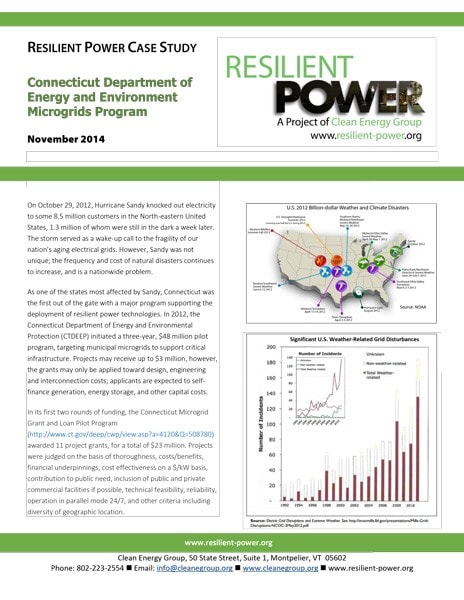
This case study presents the Connecticut Department of Energy and Environment (CTDEEP)’s Microgrid Program.
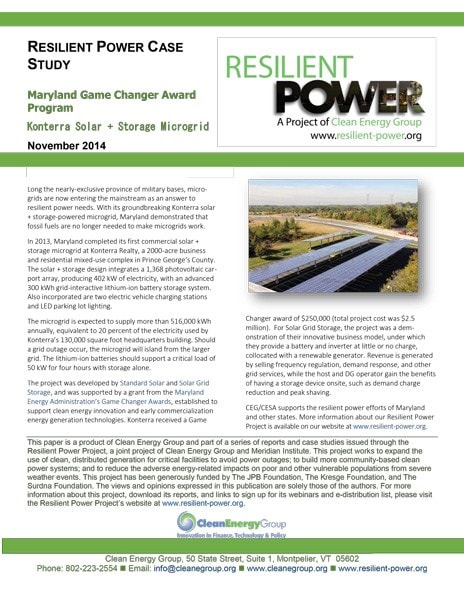
This case study profiles the Maryland Game Changer Award Program and the Konterra solar + storage microgrid that the award program helped to fund.
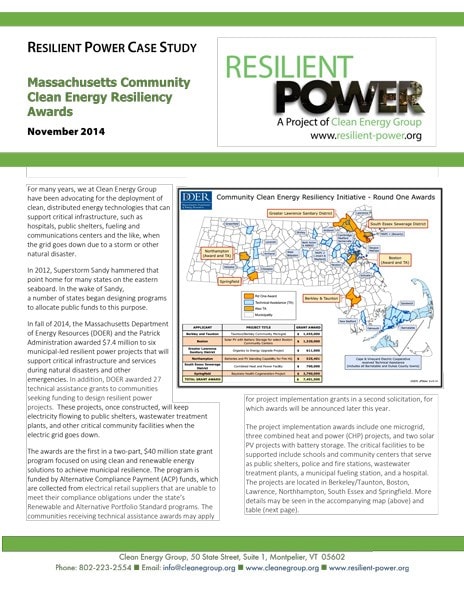
This case study presents the Massachusetts Department of Energy Resources (MassDOER)’s Community Clean Energy Resiliency Awards.
This paper describes financing tools that can be used to implement projects and that will attract private capital on highly favorable terms, thereby reducing the cost of solar and resilient power installations.
This paper outlines the dangers that power outages can pose to our most vulnerable populations, the failures of traditional backup power sources, and the opportunities to develop distributed energy systems with clean and dependable energy technologies.
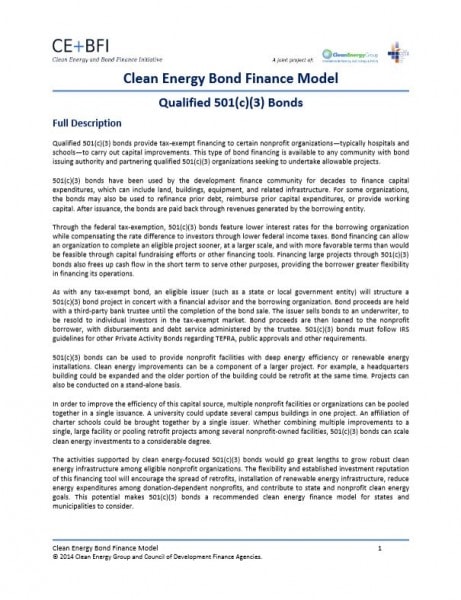
CE+BFI examines Qualified 501(c)(3) bonds as a mechanism for communities with 501(c)(3) organizations seeking to undertake significant clean energy projects.
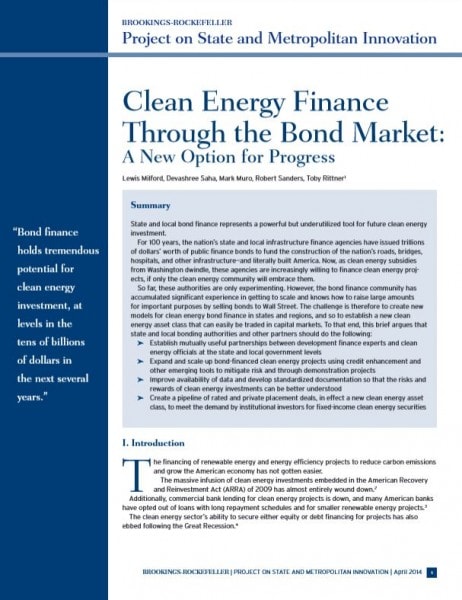
Clean Energy Group, the Brookings Institution and the Council of Development Finance Agencies have just released a new paper on a powerful but underutilized tool for future clean energy investment: state and local bond finance.