




Publications Library
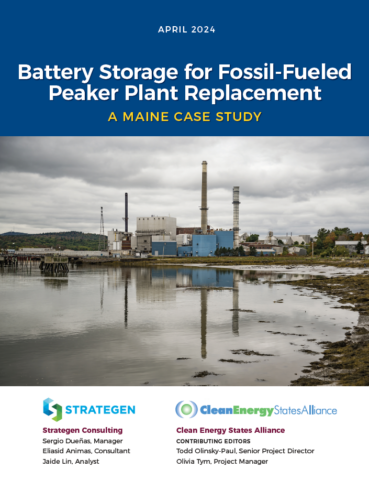
This analysis demonstrates that battery storage can cost effectively replace aging fossil-fueled peaker power plants in New England.
This issue brief provides recommendations and guidance on incentive rate-setting for states seeking to develop distributed (behind-the-meter) energy storage incentive programs. It is intended to help states decide how to structure incentive programs and how to set incentive rates.
Clean Energy Group submitted comments to the Massachusetts Department of Energy Resources on DOER’s Solar Massachusetts Renewable Target (SMART) Program.
Clean Energy Group submitted comments to the Massachusetts Department of Energy Resources on DOER’s December 2023 report, “Charging Forward: Energy Storage Toward a Net Zero Commonwealth.”
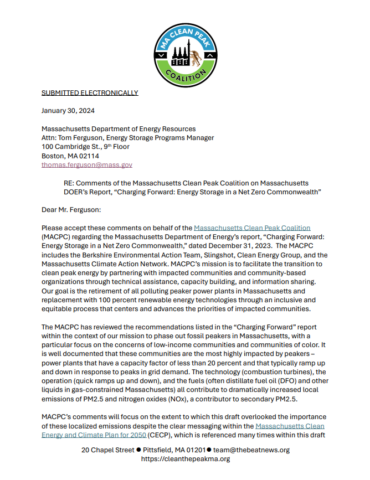
The Massachusetts Clean Peak Coalition submitted comments to the Massachusetts Department of Energy Resources regarding DOER’s December 2023 report, “Charging Forward: Energy Storage in a Net Zero Commonwealth”.
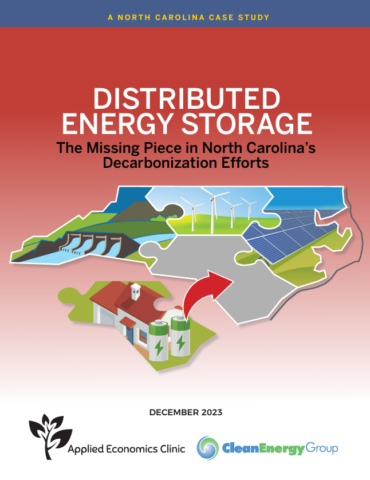
This report aims to give policymakers and advocates the information they need to encourage the inclusion of distributed storage policy in the state’s carbon reduction plans.
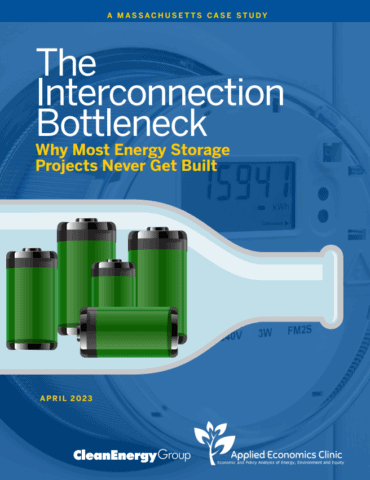
This report investigates the barriers to more effective and efficient interconnection of distributed energy storage resources.
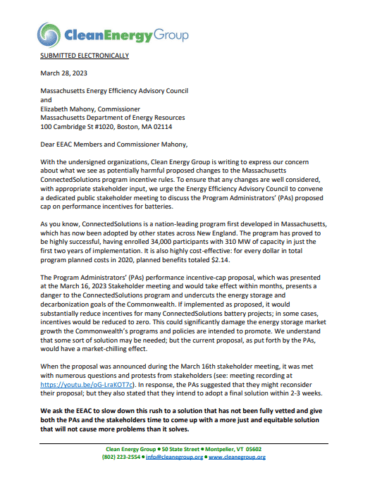
CEG submitted comments to the Massachusetts Energy Efficiency Advisory Council to express concern about potentially harmful proposed changes to the Massachusetts ConnectedSolutions program incentive rules.
This report highlights best practices, identifies barriers, and underscores the urgent need to expand state energy storage policymaking to support decarbonization in the US.
PEAK Coalition Comments on the New York Energy Storage Roadmap
The PEAK Coalition, in partnership with Earthjustice and El Puente, filed comments on March 7, 2024, with the New York State Public Service Commission. The comments call for the need for a capacity carveout and additional incentives for battery storage in New York City (NYISO’s Zone J) in any upcoming order implementing New York’s Energy Storage Roadmap.