




Gentilly Beehive Microgrid
Mobile solar+storage units provide resilient backup power across the city of New Orleans in the event of a power outage.
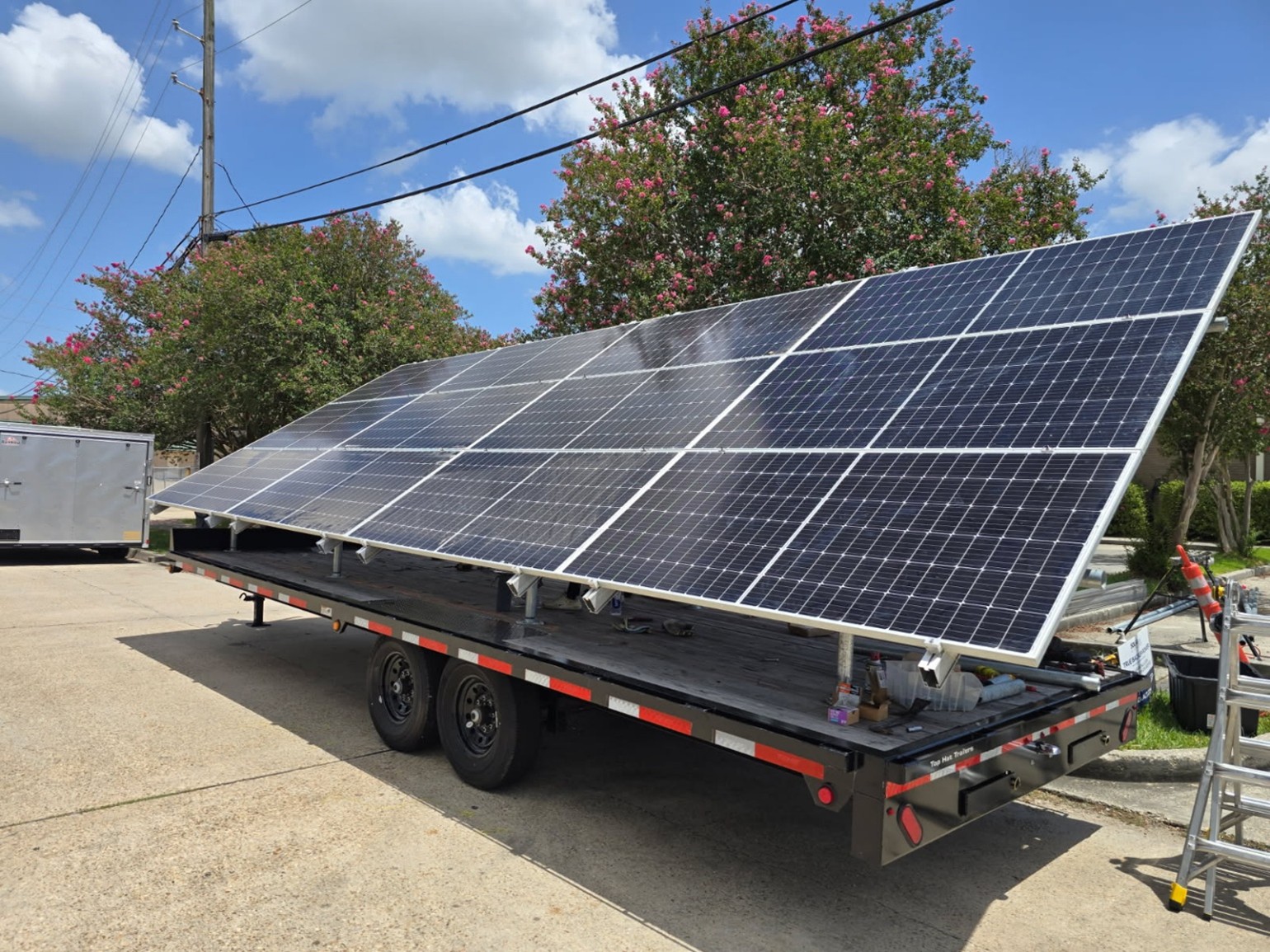
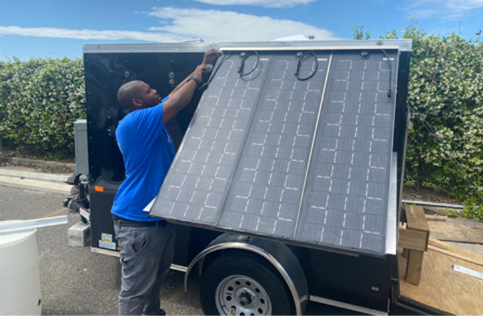
The Gentilly Beehive Microgrid’s “Queen Bee” trailer. Photo Credit: Groundwork New Orleans.
Twenty-one New Orleans residents died in the wake of Hurricane Ida in 2021. Most of these deaths were caused by excessive heat from a 10-day citywide power outage following the storm. In the wake of this tragedy and with a deepening recognition of the need for resilient power, New Orleans-based nonprofits Footprint Project and Groundwork New Orleans partnered to create the first ever “Beehive Microgrid” to support the city during the next big disaster.
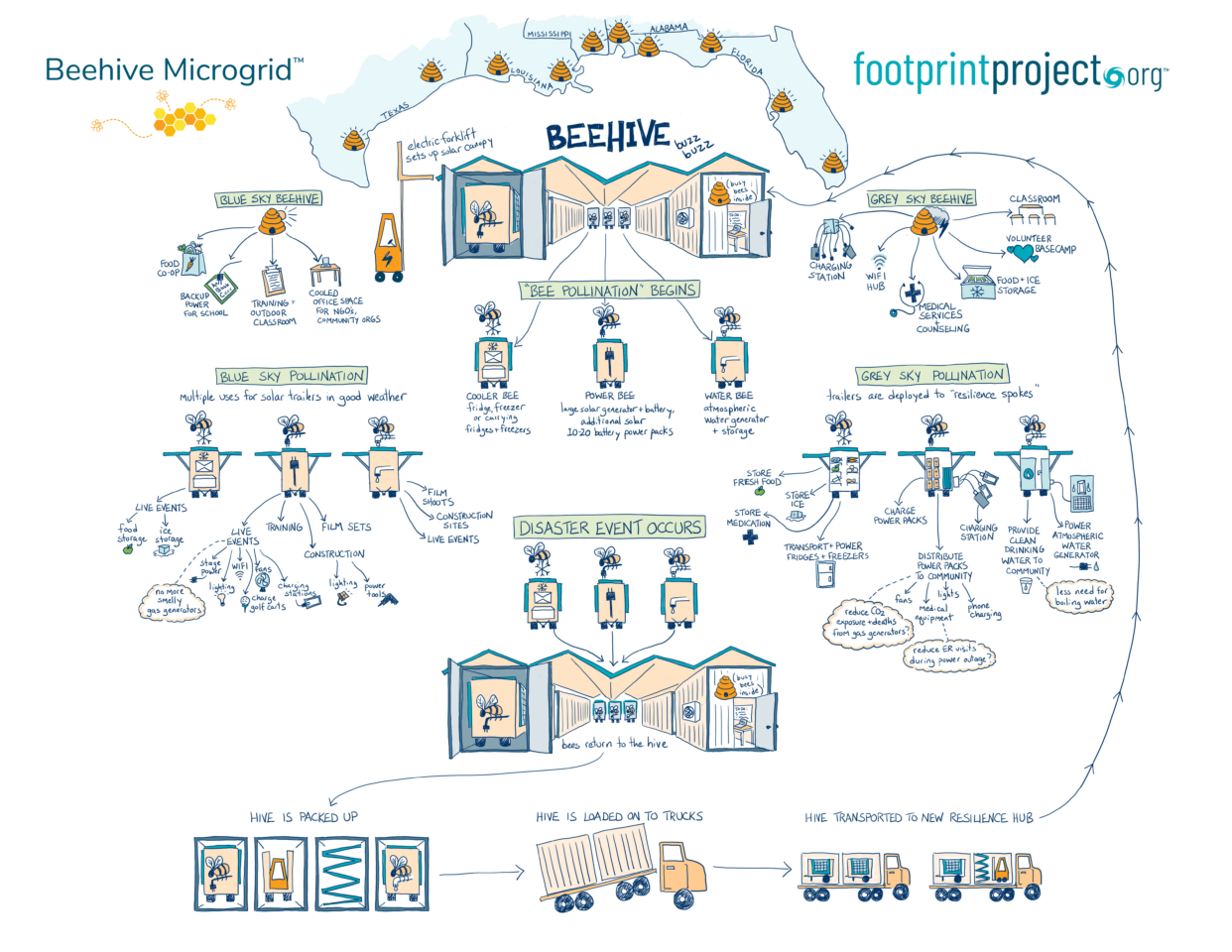
The Beehive Microgrid model, pioneered by Footprint, includes a stationary solar-powered “Hive” paired with a group of mobile battery units – the “Bees” – which can be deployed throughout the city in the event of a power outage. Mobile resilient power units can be lifesaving for medically vulnerable or mobility challenged people during prolonged power outages. This is especially true following a natural disaster when roads may be impassable and critical community facilities shut down or otherwise inaccessible. Mobile solar+storage delivers invaluable backup power to communities during an emergency and can support a variety of operations, from powering field work for disaster recovery and first responder services to offering charging ports for residents in need of power for cell phones, home medical devices, and refrigeration for medication. Solar+storage microgrids are not only emission-free, they are also immune to fuel shortages, a common occurrence after natural disasters.
Siting Considerations and Challenges
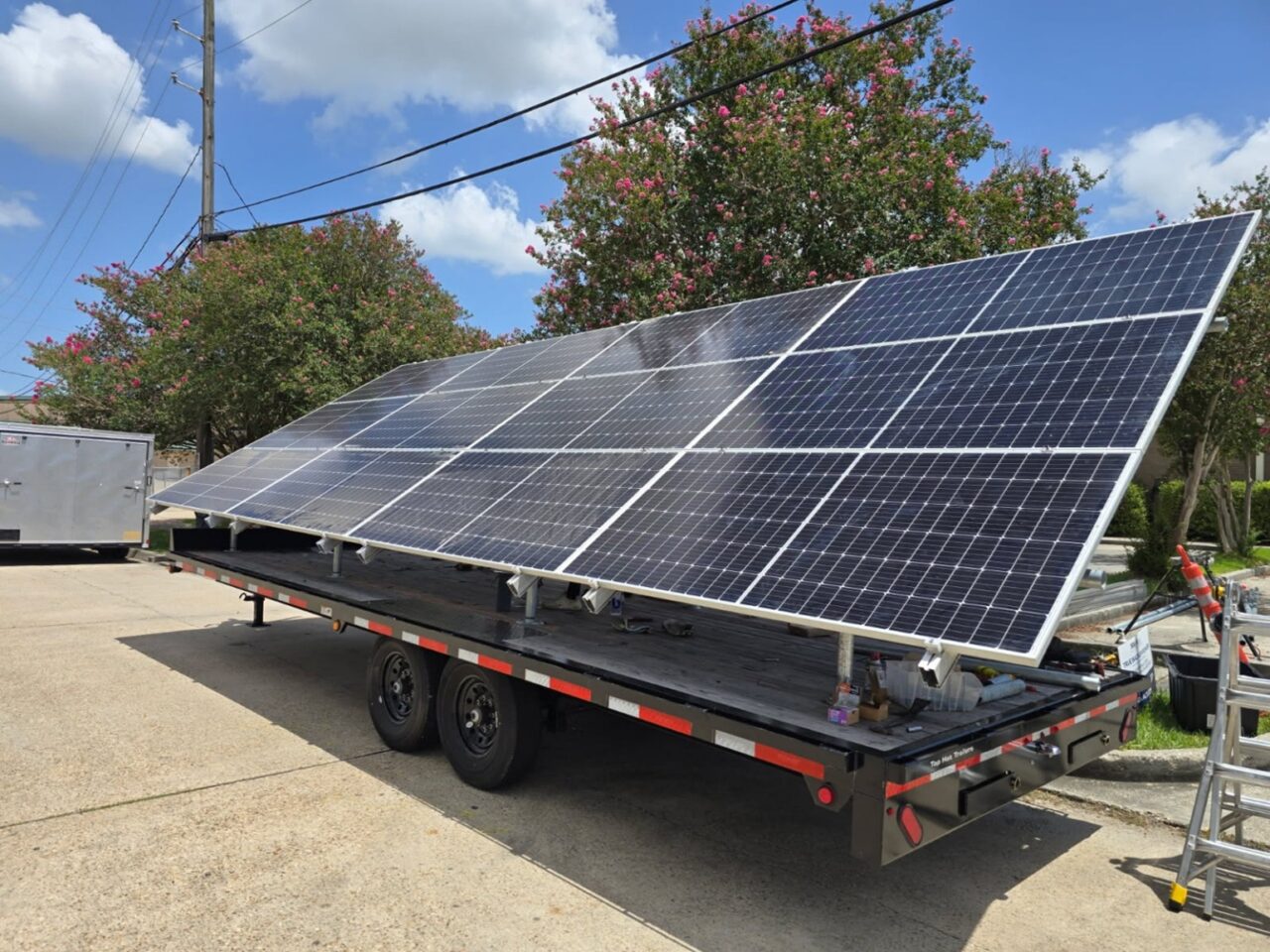
The NET Charter High School: Gentilly was selected as a convenient central location for the microgrid. However, during the project development process, the school decided against installing a permanent, roof-mounted and grid-connected solar array. Footprint Project and Groundwork New Orleans adapted the Beehive model to instead center around one large “Queen Bee” unit: a 30-foot solar+storage-powered trailer that will remain on-site at the school but will not be grid connected. The Queen Bee trailer is accompanied by one standard-size mobile “Bee” trailer, with plans to add two more mobile units which will provide an additional 16 kW of solar and additional 37 kWh in battery storage capacity. One of the planned units will be equipped with refrigeration for cooling and storing food and medication, and the other will be equipped with atmospheric water generation technology that will allow production of potable water during outages when wells or other water infrastructure may be unavailable.
Because the current configuration is not grid-connected, the economic benefits stem from avoiding the costs related to outages and avoided use of fossil fuel generators. Grid-connected microgrids can provide revenue to the facility in which they’re installed, such as offsetting grid electricity with onsite solar generation, demand charge reduction, providing grid services, participation in virtual power plant (VPP) platforms, and enrollment in state or local incentive programs.
Funding and Project Support
The Gentilly Beehive Microgrid project was supported by a $500,000 Environmental Justice Collaborative Problem-Solving Cooperative Grant from the U.S. Environmental Protection Agency. The proposed project originally included 10 Bees; however, in February 2025, the EPA issued a termination notice for the funding award, forcing the project team to scale back the design.
In 2022, this project was awarded $7,500 through Clean Energy Group’s Technical Assistance Fund to support the development of a solar+storage feasibility assessment.
The microgrid was designed by Solar Alternatives and installed by Schneider Electric. These companies were responsible for technical engineering oversight while incorporating workforce development goals.
The Microgrid in Action
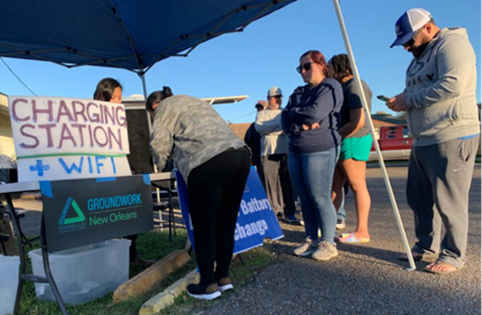
The Gentilly Beehive Microgrid was tested in 2022 when a tornado hit New Orleans. The mobile solar+storage unit was quickly deployed to provide charging stations and backup power until grid-power was restored.
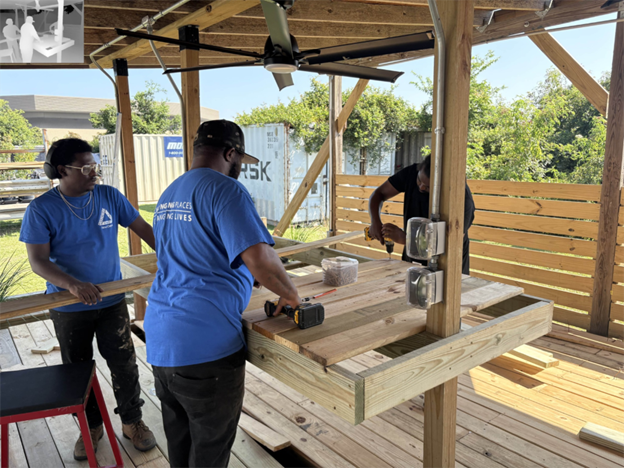
When not in use for disaster relief, the mobile solar+storage units have been dispatched to provide emissions-free power at community events such as Mardi Gras and Jazz Fest. The high school also uses the microgrid to power their outdoor classrooms and as a learning opportunity for students.
The Gentilly Beehive Microgrid also served as a workforce development opportunity. Groundwork New Orleans staff were trained to be responsible for monitoring and maintaining the system. The system will need routine electrical and mechanical maintenance performed, tires checked, batteries tested, and solar panels cleaned.
The Beehive Microgrid model is an innovative and scalable solution to the challenges associated with climate-disaster related grid outages. By combining mobility, clean energy, and workforce development through community connection, this project will assist communities in adapting for, responding to, and recovering from natural disasters.
Future Expansion: North Carolina
The success of the Gentilly Beehive Microgrid has paved the way for future Beehive Microgrid projects. Footprint, in partnership with Land of Sky Regional Council and the North Carolina Sustainable Energy Association, received grant funding from the North Carolina Department of Environmental Quality State Energy Office to deploy permanent and mobile microgrids that will provide accessible power in the wake of future weather disasters. This grant funding will support two Beehive Microgrids in North Carolina, as well as 24 stationary microgrids across six counties in North Carolina that were affected by Hurricane Helene in September 2024.
Photos
Click on the photos below to view full size with captions.
Installation Details
Year Commissioned
2022
Services Provided
Backup power
Supported Infrastructure
A “Beehive Microgrid” consisting of one stationary “Queen Bee” unit and one mobile “Bee” unit.
Solar
24 kW total (16 kW on the stationary unit and 8 kW on the mobile unit).
Storage
74 kWh total (55.5 kWh on the stationary unit and 18.5 kWh on the mobile unit).
Project Partners
Groundwork New Orleans, Footprint Project, Solar Alternatives, Schneider Electric, the NET Charter High School: Gentilly, Clean Energy Group
